
Patios in Romford & East London
Natural stone, porcelain and concrete patios, built on proper foundations with drainage that works. Free quote, fixed price, no money up front.
Patio Design & Installation
A patio is the part of the garden you actually use, so it needs to be right — level underfoot, draining away from the house, and laid in a material that still looks good after a few winters.
We design and install patios across Romford, Hornchurch, Upminster and the surrounding areas, handling the full job: clearing the existing surface, excavation, sub-base, falls and drainage, laying, and pointing. We’ll also take on the steps, edging, walls and turfing around it so the whole space is finished as one. Every patio carries a 10-year guarantee.
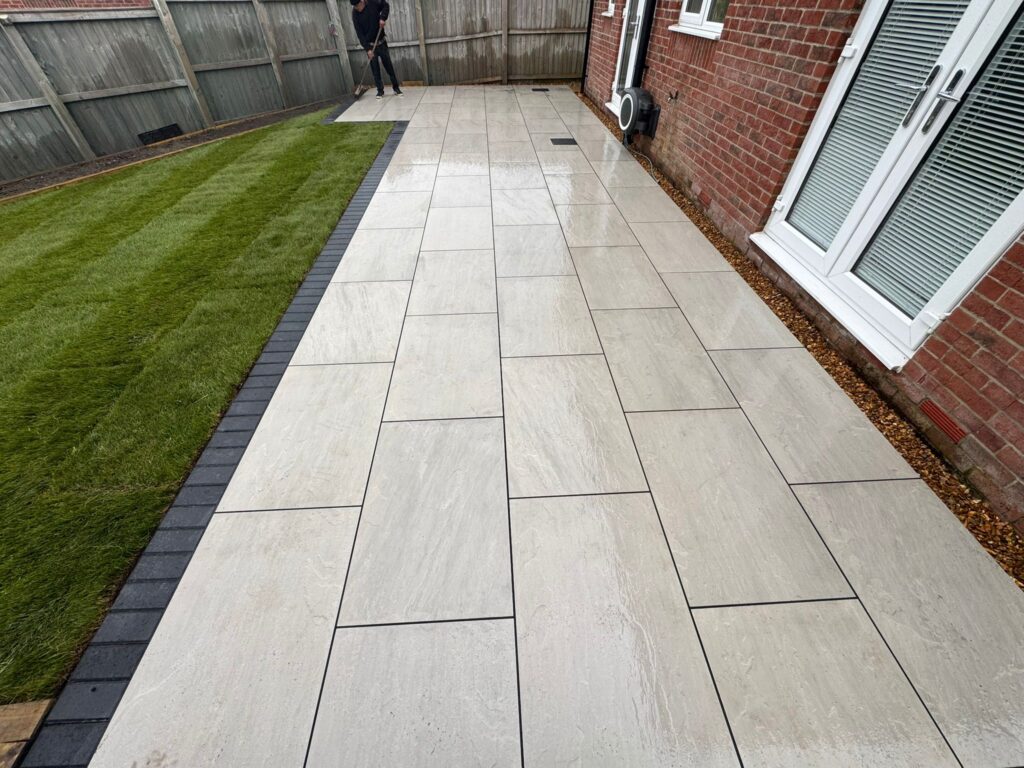
Indian sandstone
The most popular natural stone patio in the UK, and for good reason. It’s warm-toned, riven underfoot so it isn’t slippery, and works particularly well with older or traditional properties. Every slab is slightly different, which gives a patio character a manufactured product can’t match.
Porcelain
The go-to for a contemporary finish. It’s dense and virtually non-porous, so it resists staining, doesn’t absorb moss or algae the way stone can, and cleans up with a brush and water. Colours stay consistent across the whole area. It needs cutting and laying with more precision than stone, which is why it’s worth having laid by someone who does it regularly.
Block paving
Worth considering for a patio as well as a driveway, especially if you want the two areas to match, or you’re working around curves and awkward shapes where slabs would need heavy cutting.
cONCRETE
The most economical option, and much improved in recent years. Modern concrete slabs imitate riven stone or sawn stone convincingly, in consistent sizes that lay quickly and cleanly.
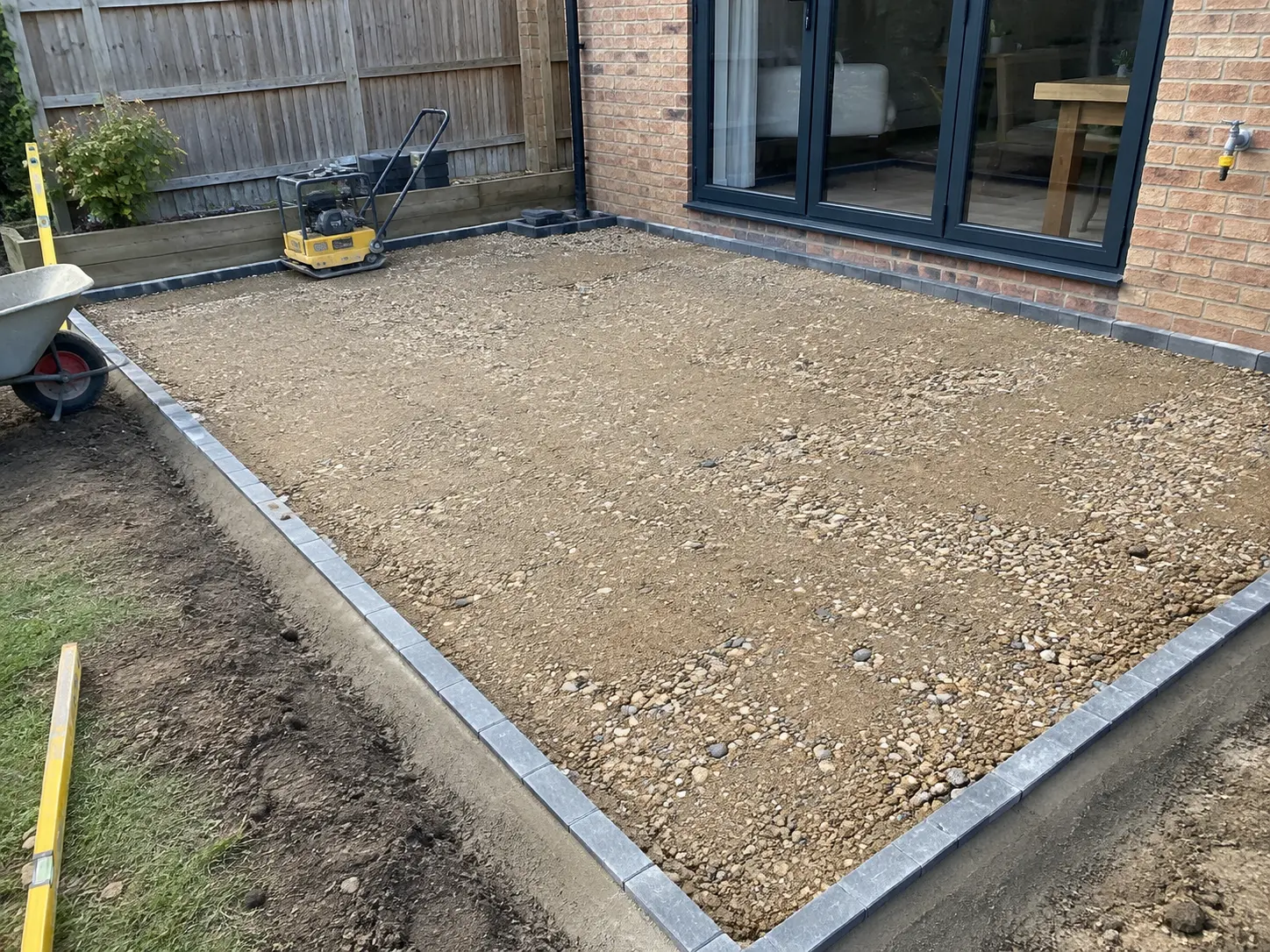
What's Underneath Matters
Most patio problems are foundation problems. Slabs that rock, joints that crack open, moss that keeps returning, water pooling in the middle or running back towards the house — none of that is the fault of the stone.
We excavate to the right depth, lay and compact a proper sub-base, bed every slab fully rather than on five dabs of mortar, and set the falls so water runs away from the building and into a drain or border. It’s slower than the alternative and it’s the reason our patios stay flat.
We’ll also tell you honestly if what you’ve got can be lifted, re-laid or cleaned rather than replaced. A tired patio isn’t always a failed one.
How long does a patio take to lay?
Most take three to five days depending on size, access and how much needs clearing first. Awkward access or a lot of muck to remove adds time, and we’ll tell you that at quote stage rather than halfway through.
Sandstone or porcelain — which should I choose?
Porcelain if you want low maintenance, consistent colour and a modern look, and don’t mind the higher material cost. Sandstone if you prefer natural variation and a warmer, more traditional feel. Both last well when laid properly.
Is porcelain slippery when wet?
External porcelain is manufactured with a textured, anti-slip surface and is rated for outdoor use — it’s a different product from indoor tiles. It’s no more slippery than wet stone.
Do I need planning permission for a patio?
Generally no for a patio at ground level in a domestic garden. It can become an issue if you’re raising the level significantly, building against a boundary, or in a listed building or conservation area. We’ll flag anything worth checking before we start.
Can you build steps, walls or seating into it?
Yes. Steps, retaining walls, raised beds, edging and turfing are all part of what we do, and it’s easier and cheaper to do them alongside the patio than to come back later.
Does the patio need sealing?
Optional, and it depends on the material. Sandstone and limestone benefit from sealing to resist staining and keep the colour up. Porcelain doesn’t need it at all.